

Export headlines rarely tell the full story of a sector's health, and nowhere is that truer in 2026 than in Irish pharmaceutical manufacturing. Bank of Ireland's Manufacturing Sector H1 2026 Insights and H2 2026 Outlook report, published in August 2026, confirms that Ireland's manufacturing sector has recorded 18 consecutive months of expansion since December 2024, posting an average Purchasing Managers' Index of 54.1 in the first half of the year against an EU average of 51.2. The sharp decline in pharmaceutical exports to the US, down 70% year on year, reflects a correction from exceptionally elevated 2025 activity levels driven by pre-tariff front-loading rather than any structural deterioration in Ireland's biopharma competitive position. With approximately 323,000 people employed across the manufacturing sector and Ireland's average effective US tariff rate remaining at just 2.7%, among the lowest globally, the fundamentals underpinning Irish pharmaceutical manufacturing are as strong as they have been at any point in the sector's history.
Conor Magee, Bank of Ireland's head of Manufacturing Sector, frames the current moment accurately: Irish manufacturing fundamentals are strong and well positioned for continued momentum, with businesses maintaining a laser focus on costs and margins while leveraging competitive advantage from green credentials. For pharmaceutical leadership teams and life sciences ireland stakeholders, those two levers, cost discipline and sustainability positioning, are precisely where the sector's medium-term competitive differentiation will be won or lost. Ireland's manufacturing emissions fell by 3.9% in 2025 against a backdrop of sector-wide expansion, a combination that demonstrates the pharmaceutical manufacturing community's capacity to grow output and reduce environmental footprint simultaneously, a balance that the EU's pharmaceutical regulatory framework increasingly rewards through expedited review pathways and preferential positioning in Critical Medicines Act supply security assessments.
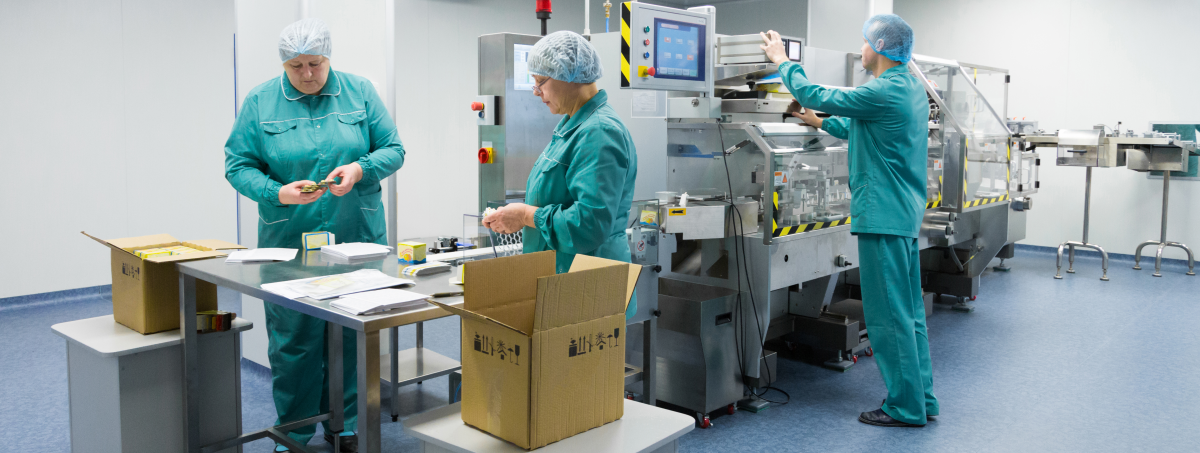
The AI dimension of the Bank of Ireland report carries particular significance for pharmaceutical manufacturing and operational excellence in pharma. Citing Ibec research, the report notes that AI is now a strategic priority for 52% of Irish businesses, with pharmaceutical companies among the most advanced deployers of computer vision, predictive maintenance, digital twins, and production scheduling optimisation. Ireland is described as transitioning from Industry 4.0 digitalisation to AI-enabled manufacturing, with MedTech, pharmaceutical, semiconductor, and food manufacturing businesses leading that transition. For biopharma ireland operations managing biologics manufacturing, quality assurance processes, and regulatory affairs compliance simultaneously, AI-enabled predictive maintenance and digital twin deployment represent a direct operational excellence improvement that reduces batch failure risk, shortens validation cycles, and strengthens the manufacturing performance data that the HPRA and FDA review during Good Manufacturing Practice inspections.
Three priorities would allow Irish pharmaceutical companies to build on Bank of Ireland's positive assessment. First, pharmaceutical manufacturing sites should accelerate investment in AI-enabled quality assurance systems, using NIBRT's advanced manufacturing research programmes to validate AI-assisted process analytical technology deployments against HPRA and FDA regulatory expectations before full-scale implementation, ensuring that digital transformation in manufacturing delivers both operational efficiency and continued regulatory compliance. Second, pharmaceutical companies should formalise their green credentials as a procurement and tender differentiator, given that the IPHA's March 2026 economic report confirms that sustainability performance is increasingly weighted in HSE and EU public procurement evaluations for medicines supply contracts, making environmental investment a commercial advantage rather than a cost centre. Third, pharmaceutical leadership teams should engage with Enterprise Ireland's manufacturing transformation programmes to access co-funding for AI, automation, and sustainability capital investment, reducing the financial risk of the strategic investments that Bank of Ireland's report identifies as the most rational deployment of capital in the current environment of geopolitical uncertainty and constrained global trade flows.
Ireland's pharmaceutical manufacturing sector entered 2026 carrying the weight of a 2025 export correction and operating in one of the most uncertain global trade environments of the past decade. Bank of Ireland's data confirms it is carrying that weight well, and the 18-month expansion trend, strong employment, low tariff exposure, and accelerating AI and sustainability investment all point toward a sector whose long-term trajectory remains confidently upward.
















.png)

